The short answer
Each part of the UK has its own tenancy law, and its own written information a landlord must give. AgreeVia has a separate agreement for each nation, based on the government model where there is one, plus the deposit and information notices for England and Northern Ireland.
What to agree before the job
- Use the agreement for the nation the property is in, not where you live
- The tenants (up to four), the property and the start date
- Rent, how often and how it is paid, and which bills are included
- The deposit, and which protection scheme holds it
- Repairs, access, pets and ending the tenancy
- Any guarantor, and how they sign (in Scotland a guarantor must also sign a printed copy by hand)
- The notices you must give alongside the agreement, and their deadlines
Which AgreeVia documents fit
- Tenancy Agreement (England): an assured periodic tenancy covering what the Renters' Rights Act rules say landlords must give tenants in writing
- Private Residential Tenancy Agreement (Scotland): based on the Scottish Government model, updated for the Housing (Scotland) Act 2025
- Tenancy Agreement (Wales): the Welsh Government model standard occupation contract
- Tenancy Agreement (Northern Ireland): based on the Department for Communities model
- Deposit Prescribed Information (England) and Tenancy Information Notice (Northern Ireland)
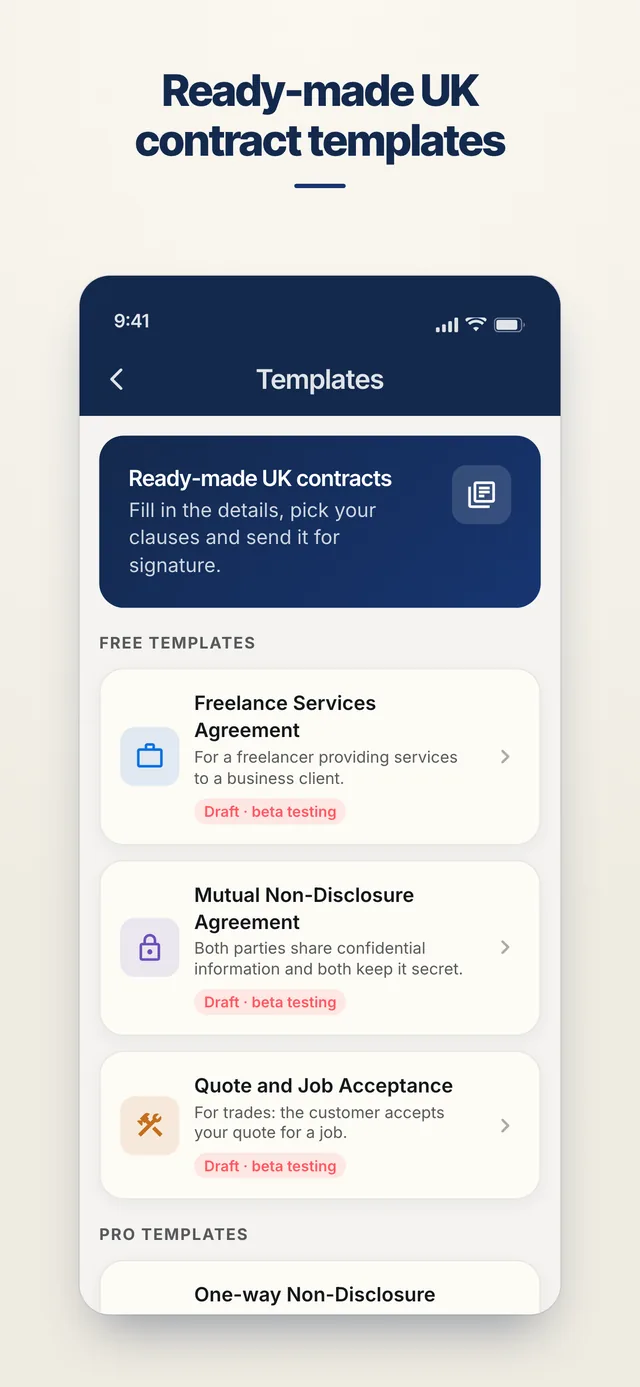
All of them are Pro templates: you can fill them in and preview them for free, and creating them needs AgreeVia Pro. They have been reviewed by AgreeVia, not by a solicitor, and lettings law changes often, so check them against current government guidance before you use them.
How it works
- Fill it in on your phoneAnswer a few plain questions, or type the items into a quote. You see a preview before anything is created.
- Add who signsPick them from your contacts, or type their email address and AgreeVia sends them a link.
- They sign without an accountThey open it in their browser, read it and sign with a finger. No app to install.
- Everyone keeps a copyThe signed PDF goes to everyone. Every view and signature is in a tamper-evident audit trail you can check at agreevia.co.uk/verify.
Proof, if there's a dispute
Every view and signature is recorded with a time stamp in a tamper-evident audit trail. If someone remembers the deal differently, you have the signed document, a record of when they opened and signed it, and an evidence package you can generate. AgreeVia doesn't give legal advice, and it doesn't take payments: your bank details go on the invoice and your customer pays you directly.
FAQs for landlords
Can tenants sign a tenancy agreement electronically?
Generally yes, for an ordinary tenancy agreement. Some documents need more, such as deeds and, in Scotland, some guarantees, which is why the Scottish agreement asks a guarantor to also sign a printed copy by hand. See Are electronic signatures legal in the UK?
Do the tenants need an account?
No. Each tenant gets a link, reads the agreement in their browser and signs. Everyone gets the signed PDF.
Has a solicitor checked these agreements?
No. They have been reviewed by AgreeVia, not by a solicitor. In the app you confirm you've read the finished agreement before anyone is invited to sign. If something important turns on it, take advice.
Try it on your next job
Free to try, no card needed. Already have an account? Sign in. AgreeVia works in your browser and is live on Google Play. Coming soon to the App Store.